
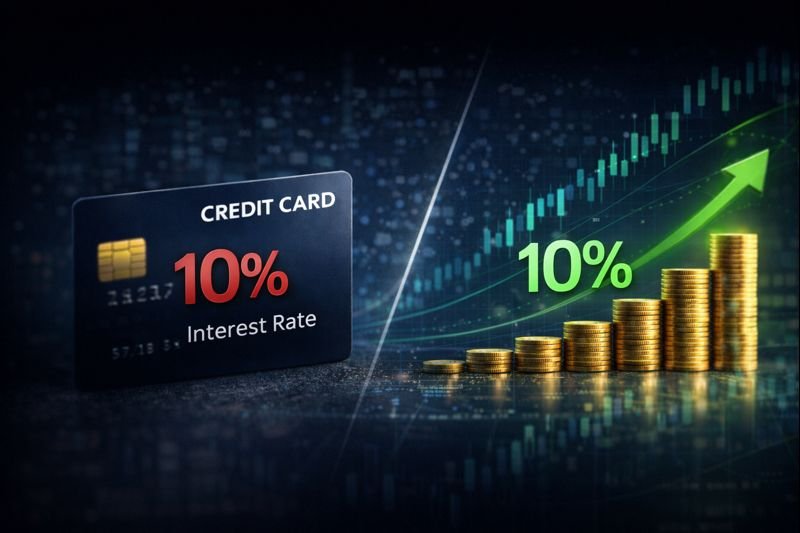
In recent days, a proposal to cap credit card interest rates at 10% in the United States has gained attention. For many households, the idea feels like a long-awaited relief. Lower interest payments mean smaller monthly burdens, slower-growing balances, and a bit more breathing room in already tight budgets.
There is no doubt about it: paying less interest is better than paying more.
But there is a quieter truth behind the headlines—one that rarely makes it into public debate. Lower interest rates, by themselves, do not lead to financial well-being.
Imagine a familiar situation. Today, your credit card charges 25% interest. Tomorrow, that rate is reduced to 10%. The math improves immediately. Interest costs fall. Cash flow pressure eases. The debt becomes easier to manage.
Yet something essential remains unchanged. You are still relying on borrowed money to sustain your lifestyle.
As long as financial progress is defined by how cheaply we can borrow, we remain in a defensive position. Relief may arrive, but progress does not. Real financial stability begins only when the focus shifts away from debt management and toward long-term planning.
This is where many people get stuck. Financial stress is often blamed on interest rates, inflation, or economic policy. In reality, it usually stems from a lack of structure: no clear plan, no financial buffer for emergencies, and no consistent habit of saving or investing. Without these foundations, even a zero-interest environment can quietly encourage overspending rather than long-term improvement.
The most important shift, then, is not economic—it is mental.
If paying 10% interest on debt suddenly feels like a victory, it is worth asking a different question. What would it look like if that same 10% worked in your favor? Instead of paying it to a bank, imagine building toward a steady 10% growth in your own financial life over time.
That change in perspective is subtle, but powerful.
It does not require perfect timing, advanced knowledge, or large sums of money. It requires consistency and intention. Any short-term relief—whether from lower rates or higher income—can become meaningful progress if it is used to regain control rather than to expand consumption.
Reducing debt creates space. Building an emergency fund creates resilience. Setting aside a fixed portion of income for saving and investing—decided in advance, not left to chance—creates momentum. Over time, the focus moves away from simply avoiding financial harm and toward allowing compounding to quietly do its work.
Public policy can provide relief, but it cannot replace personal planning. Financial freedom does not arrive when interest rates fall. It arrives when individuals make deliberate choices: to spend with care, to save consistently, to invest patiently, and to think beyond the immediate moment.
That is how temporary relief turns into lasting financial well-being.
Take the Next Step Toward Financial Control
Moving beyond debt management requires more than good intentions. It requires a system.
At TonyCapitalInvest, we focus on practical tools that bring clarity and structure to everyday finances.
Cash Flow Mini helps you clearly see where your money goes each month, allowing you to regain control without complexity.
Budget & Wealth Builder provides a simple framework to organize your finances, set realistic savings goals, and begin building long-term wealth with purpose.
These tools are designed to help transform short-term financial relief into steady, long-term progress.
Build a financial system that works quietly in the background—so progress happens even when you are not thinking about it.